


Written by IBN EL KHATYB | Founder of wolfGymCore
Founder of wolfgymcore.com. Strength and systems specialist with two years of experience in fitness content, AI automation workflows, and server infrastructure. Applies the same input-output logic behind his AI client-acquisition systems to strength training programme design and biomechanics — because the body, like any well-built system, adapts to structure, not chaos.
Last Updated: May 2025 | Read time: 12-15 minutes
Introduction
Most people approach fat loss like they’re debugging random code. They cut calories, eliminate carbs, panic when the scale doesn’t move—working harder, not smarter. From a systems perspective, fat loss isn’t chaos. It’s an optimization problem. Your body’s an operating system: input energy (calories), process it (metabolism), output performance (strength, energy, body composition). Get the inputs and processes right, and the outputs follow. In how to lose fat in 4 weeks, you don’t need perfection. You need a system. That’s what we’re building here.
⚠️ Medical Disclaimer
This article is for informational and educational purposes only. It is not intended as professional medical advice, diagnosis, or treatment. Consult a licensed healthcare provider or registered dietitian before starting any new nutrition or fitness program, especially if you have pre-existing medical conditions, take medications, or are pregnant or breastfeeding.
What is How to Fat Loss & Why Your Current Approach Is Backwards
Fat loss happens when you consistently consume fewer calories than you burn, which leads your body to use stored energy, including body fat, over time. It is not about starvation or cutting out entire food groups. It is about creating a steady calorie deficit through smart nutrition choices while supporting muscle retention, energy, and long-term adherence.
TL;DR: Your body does not care about “low-carb” or “intermittent fasting” by itself. It responds to energy balance. The most reliable way to lose fat is to eat fewer calories than you burn, prioritize protein and fiber for fullness, and follow a plan you can actually stick to.
The System-Logic Breakdown
The biggest mistake many beginners make is optimizing the wrong thing. Fat loss is not about the strictest diet. It is about the diet you can sustain for 4 weeks without burning out.
From a practical perspective, fat loss depends on three things: calorie deficit, meal structure, and habit consistency. Many plans focus only on calorie math and ignore structure and behavior, which makes them harder to follow.
Recent evidence suggests that simpler calorie-controlled approaches can work just as well as more complex eating patterns. In one 2022 study of 139 participants over 12 months, standard calorie restriction led to about 8.0 kg of weight loss, while time-restricted eating led to about 6.3 kg, with no clear advantage for the fasting approach.
One common myth is that low-fat foods automatically help fat loss. In reality, many low-fat products contain added sugar, starch, or salt to improve taste. A better rule is to check the full label, not just the front of the package.
Coach’s Pro-Tip
For the first 4 weeks, focus on three targets: eat enough protein to support fullness and muscle retention, fill half your plate with non-starchy vegetables, and track your calories closely enough to notice patterns. That is the foundation. The details matter less than consistency.
Dwell Time Hook
Want to know exactly how many calories you should eat? Keep reading, because the next section gives you a simple formula you can use right away.How to Calculate Your Fat-Loss Target (Without Obsessive Tracking)
The biggest mistake most plans make is giving you a calorie number with no context. A target that works for one person may be too low for another, so the goal is to estimate your maintenance intake first and then create a modest deficit from there.
Your starting point is your total daily energy expenditure, or TDEE, which is the number of calories you burn each day from basic body functions, daily movement, and exercise. For most people, a deficit of about 15 to 20 percent is a practical starting point for fat loss. That is usually enough to make progress without making the plan feel extreme.

Step 1: Estimate Your TDEE
A simple starting estimate is often enough for beginners, especially if you are using it as a first draft rather than a final number. Body size, sex, age, and activity level all affect your needs, so the same calorie target will not fit everyone.
A rough shortcut many people use is body weight in pounds multiplied by an activity-based range. Smaller and less active people tend to land on the lower end, while larger and more active people usually need more calories.
A more practical method is to start with your current body weight, then adjust based on how active you are. If you sit most of the day, your maintenance will be lower. If you train several times per week or have an active job, your maintenance will be higher.
Step 2: Set Your Deficit Target
Once you have a realistic maintenance estimate, reduce it by about 15 to 20 percent. That is often a good balance between progress and sustainability for beginners.
For many people, this creates a rate of fat loss that is steady rather than extreme. The exact number on the scale will vary from week to week because of water, sodium, sleep, stress, and training.
Step 3: Verify It Feels Livable
Track your intake for several days and pay attention to how you feel. If you are constantly hungry, low on energy, or thinking about food all day, the target may be too aggressive.
If your weight trend is flat after a couple of weeks and your tracking is reasonably accurate, lower calories slightly. Small adjustments are usually better than dramatic changes.
TL;DR: Estimate your maintenance calories, reduce them by about 15 to 20 percent, and then adjust based on hunger, energy, and progress. The goal is not perfection. The goal is a plan you can follow consistently.
Coach’s Pro-Tip
Most people worry too much about whether their target is 1,950 or 2,050 calories. A small daily difference matters less than staying consistent across the week. What matters most is the average you can stick to.
Dwell Time Hook
Now you have your target. But eating the right number means nothing if you are hungry all the time. The next section shows you the plate structure that helps you stay full while still losing fat.
How to Calculate Your how to Fat Loss Target (Without Obsessive Tracking)
The System Architecture:
read a new system architecture :Elite Healthy Habits: 7 Proven Ways to Thrive
Here’s what kills 90% of fat-loss attempts by week 2: hunger. Not discipline. Not willpower. Actual biological hunger. Your gut’s signaling, your brain’s fighting back, and three weeks of misery feel unsustainable.
The solution isn’t eating more calories. It’s eating smarter calories. From a systems perspective, satiety comes from three inputs: protein, fiber, and volume. Most diets nail one. We’re nailing all three.
The Framework (No Measuring Required)
Build every meal—breakfast, lunch, dinner, snack—around this ratio:
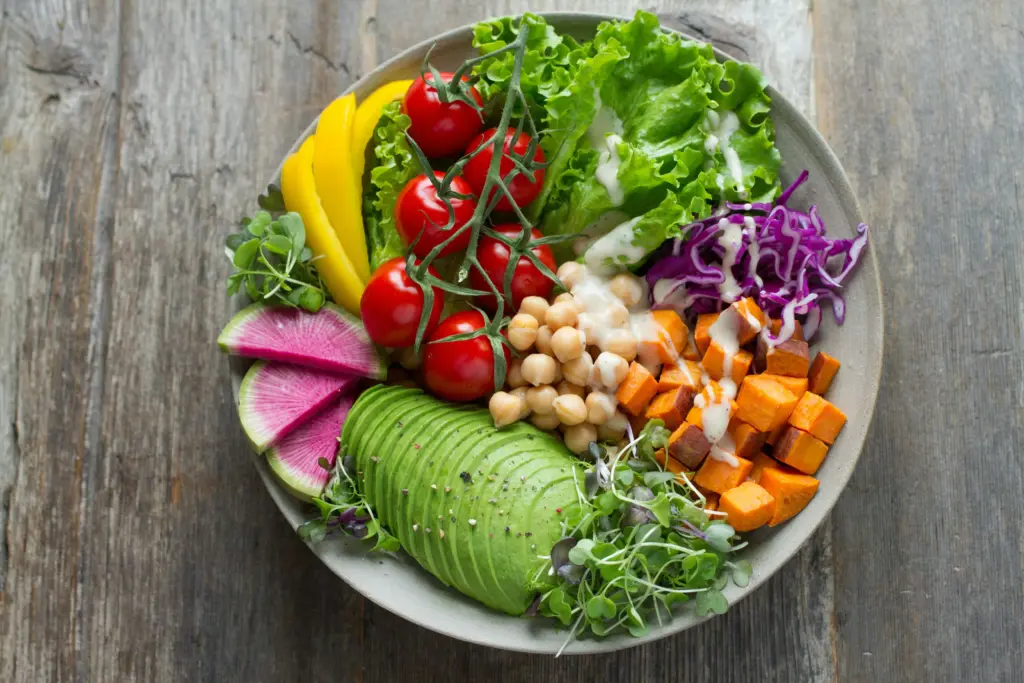
- ½ plate: Non-starchy vegetables (spinach, broccoli, peppers, zucchini, Brussels sprouts, cauliflower). These are high-volume, low-calorie, packed with fiber. They trigger fullness signals.
- ¼ plate: Lean protein (chicken, fish, eggs, Greek yogurt, ground turkey, tofu, cottage cheese). Protein requires more energy to digest, keeps you full longer, and preserves muscle during fat loss.
- ¼ plate: Complex carbs OR healthy fat (sweet potato, brown rice, oats, avocado, olive oil, nuts). Pick one per meal. Complex carbs digest slower than simple sugars. Healthy fats add satiety and hormone support.
Real Meal Examples (No Calorie Counting)
Breakfast: 2 scrambled eggs, 2 slices whole-grain toast with almond butter, side of spinach sauté. Rough estimate: 400–450 cals.
Lunch: Grilled chicken breast (fist-sized), 1 cup cooked brown rice, roasted broccoli and carrots with olive oil. Rough estimate: 550–600 cals.
Snack: Greek yogurt (7 oz) + handful of berries. Rough estimate: 150–180 cals.
Dinner: Salmon fillet, medium sweet potato, asparagus with lemon. Rough estimate: 500–550 cals.
Total: ~1,600–1,780 cals (no tracking required, just visual portions).
The beauty here? You’re eating real food in substantial portions. You’re not hungry because your stomach’s full of vegetables and your hormones are stable from protein. And you’re not obsessing because you’re not counting.
The Data Behind It
A 2024 meta-analysis of 47 randomized controlled trials (3,363 participants) found that diets including balanced macros with adequate protein and fiber showed equal or better adherence than low-carb or low-fat extremes. Why? They’re less psychologically restrictive. You’re not eliminating anything—you’re just upgrading quality.
TL;DR: Build plates: ½ vegetables + ¼ protein + ¼ carbs/fat. Eat until 80% full. Don’t count calories—just use visual portion control. The combination of volume, protein, and fiber keeps you satisfied while hitting your deficit.
🏆 Coach’s Pro-Tip (IBN EL KHATYB)
Batch cook 2–3 proteins on Sunday (grilled chicken, baked salmon, ground turkey). Store them. Then mix and match throughout the week with different vegetables and carbs. Same system, different meals. Takes 2 hours, eliminates decision fatigue for 6 days.
Dwell Time Hook
→ You now know your calorie target and the plate structure. But what about the mistakes that derail people by week 3? Section 4 shows you the five biggest failures—and how to sidestep them.
Five System Failures & Five Optimization Strategies to how to lose fat
The Five Mistakes That Derail Your 4-Week Reset
Mistake #1: Dropping Calories Too Aggressively (The Burnout Trap)
You calculate 2,100 calories, panic, and decide 1,500 is “faster.” By day 4, you’re ravenous. By day 10, you binge-eat an entire pizza. Back to square one. From a systems perspective, this is a stability failure. A 40% deficit is unstable; your nervous system fights back. A 15–20% deficit is sustainable because it doesn’t trigger full-blown hunger hormones. You feel fine, adherence holds, fat comes off. Slow input change = stable output.
Mistake #2: Eliminating an Entire Food Group (The Psychological Rebound)
“I’m cutting carbs.” Three weeks later, you eat an entire loaf of bread. Restriction breeds rebellion. The 2024 meta-analysis showed that balanced-macro diets (including carbs) sustained better than elimination diets. Your system can’t run on willpower alone—it needs permission to include foods you enjoy.
Mistake #3: Ignoring Protein (The Muscle-Bleeding Trap)
You hit your calorie target but only get 80g protein on a 185 lb frame. You feel weak in the gym. Your energy tanks. You lose muscle, not just fat. Your metabolic rate drops. The system backfires. Protein is non-negotiable: 0.7–0.9g per pound of body weight. It’s the structural input that preserves your engine.
Mistake #4: Obsessive Daily Calorie Counting (The Burnout Loop)
You log every bite for 60 days. By week 6, you’re exhausted. You quit. Most people overestimate how long they’ll tolerate daily precision. Track loosely for 5 days to learn portions, then use the plate method. Precision costs mental energy; adherence costs nothing.
Mistake #5: Doing Too Much Cardio to “Earn” Calories (The Cortisol Spike)
You cut 500 calories from diet AND add 10 miles of weekly running. Your body interprets this as threat—cortisol rises, hunger hormones spike, recovery tanks. Deficit + aggressive activity = burnout by week 3. Keep strength training steady, add light walking (10k steps/day). Movement is for health, not calorie math.
The Five Optimization Strategies
Tip #1: Build a “Safe Foods” Rotation (The Decision-Fatigue Kill)
Pick 3 breakfasts, 3 lunches, 3 dinners you’d eat happily every single day. Eggs on toast. Chicken and rice. Salmon and sweet potato. Rotate them. Your brain stops asking “What do I eat?” and just executes. Decision fatigue drops 60%. Adherence jumps.

Tip #2: Use the “Satisfaction Test” (The Fullness Calibration)
Eat until 80% full, not stuffed. Wait 15 minutes. Still hungry? Eat more. The satiety signal takes 15 minutes to reach your brain. This teaches your nervous system to recognize actual hunger vs. boredom. One week of this, and you stop overeating automatically.
Tip #3: Drink Water First (The Hidden Calorie Reduction)
Before a snack, drink 16 oz water. Wait 10 minutes. Still want the snack? Eat it. Often you don’t—thirst masked as hunger. This cuts snack calories 20–30% without restriction. You’re reading your body’s signals, not fighting them.
Tip #4: Plan One Weekly “Flex Meal” (The Psychological Release Valve)
Friday dinner, you eat whatever you want—pizza, dessert, full portions. One meal. It’s not a “cheat day”; it’s one meal outside tracking. Your brain knows it’s coming, so compliance stays high the other 20 meals. Flexibility sustains. Restriction rebounds.
Tip #5: Track Weekly Average, Not Daily Targets (The Consistency Metric)
Eat 2,100 Monday, 1,950 Tuesday, 2,200 Wednesday. Your weekly average is 2,083. That’s what matters. One high day or low day doesn’t wreck the system. This removes the all-or-nothing psychology that kills compliance.
TL;DR: Avoid aggressive deficits, food elimination, under-eating protein, obsessive tracking, and excessive cardio. Instead, rotate safe foods, eat until satisfied, hydrate before snacking, allow one flex meal weekly, and track weekly averages. The system wins through sustainability, not extremism.
🏆 Coach’s Pro-Tip (IBN EL KHATYB)
The best diet is the one you forget you’re on. If you’re thinking about food constantly, your system’s unstable. By week 2, this should feel automatic—wake up, eat breakfast from your 3-rotation, hit lunch and dinner, done. Zero drama.
Dwell Time Hook
→ You’ve got the roadmap. But real questions come up in week 3. The FAQ below handles the ones I hear most.
Mid-Article CTA
Save this 4-week plan to your phone. Screenshot the plate method, bookmark your calorie target, and set a weekly check-in reminder. Plans fail when they’re forgotten. Keep it visible.
FAQ: Your 4-Week Questions Answered
Q1: What if I’m still hungry after eating the plate method?
A: Hunger usually signals one of three things: too few calories (recheck your math), insufficient protein (add 20–30g), or not enough fiber (add another serving of vegetables). Before eating more, troubleshoot these first. Most hunger is fixable by the third input, not the fourth meal.
Q2: Can I do intermittent fasting during this 4 weeks instead of three meals?
A: Intermittent fasting works for some people psychologically, but metabolically it’s identical to regular eating. A 2025 BMJ review of 21 studies (1,430 participants) found IF produced ~3% body weight loss—same as standard calorie restriction. For beginners, three meals is easier. You learn hunger signals, build stable habits. IF can come later once the fundamentals stick.
Q3: How often should I weigh myself, and when?
A: Weekly, same day, same time (morning after bathroom, before eating). Your weight fluctuates 2–3 lbs daily from water, digestion, hormones. A single weigh-in means nothing. The weekly trend is the signal. If trend is down, system works. If flat after 10 days, drop calories by 100. If up despite adherence, recheck logging accuracy.
Q4: What if I travel mid-4-weeks? Does that reset everything?
A: No. Aim for the same plate structure even when dining out: ask for a vegetable side instead of fries, double the protein, pick complex carbs when available. You won’t hit exact numbers, but approximate adherence matters more than perfection. One week off-plan doesn’t erase four weeks of deficit. Resume when you return.
Conclusion: Three Takeaways
1. Fat loss is an input-output problem, not a willpower problem. Your job is setting the right calorie deficit (15–20%), building the right plate structure (½ vegetables, ¼ protein, ¼ carbs/fat), and removing friction (batch cooking, safe-foods rotation). The output (fat loss) follows automatically.
2. Adherence beats precision every single time. A 2,100-calorie diet you follow for 4 weeks beats a 1,500-calorie diet you quit after 10 days. Build your system for sustainability—that means flexibility, one weekly flex meal, weekly tracking averages, and permission to include foods you enjoy (in upgraded forms).
3. The 4-week reset is just the beginning. By week 4, you’ll have lost 4–8 lbs and built real nutritional literacy. You’ll know your calorie target, your plate structure, your hunger signals, and what triggers cravings. That foundation is gold. Scale it, extend it, adjust it. You’ve built a system you own.
Drop a comment below and visit WolfGymCore for your personalized 4-week template. 💪
read more : the-7-day clean